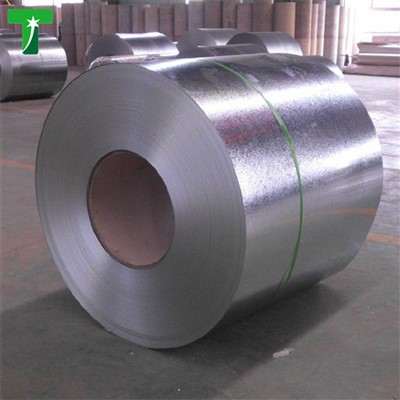
Hey there! As a supplier of mild carbon steel plates, I've been getting a lot of questions lately about the role of manganese in these plates. So, I thought I'd sit down and write a blog post to share what I know.
First off, let's talk a bit about mild carbon steel plates. They're super common in a whole bunch of industries. You'll find them in construction, automotive manufacturing, and even in some household appliances. Mild carbon steel is basically steel with a relatively low carbon content, usually less than 0.3%. This gives it some great properties like good ductility and weldability.
Now, let's get to the star of the show: manganese. Manganese is an alloying element that's added to mild carbon steel plates, and it plays several really important roles.
One of the main functions of manganese is to improve the strength and hardness of the steel. When manganese is added to the steel, it forms various carbides and other compounds. These compounds act as obstacles to the movement of dislocations within the steel's crystal structure. Dislocations are like defects in the crystal lattice, and when they can move freely, the steel can deform easily. But when manganese compounds get in the way, it becomes harder for the dislocations to move, which means the steel is stronger and harder.
For example, in construction, where mild carbon steel plates are used for building structures, the added strength from manganese is crucial. It allows the structures to withstand heavy loads and stresses without deforming or failing. Whether it's a skyscraper or a bridge, the strength provided by manganese in the steel plates helps ensure the safety and durability of the construction.
Another important role of manganese is its ability to deoxidize the steel during the manufacturing process. When steel is being made, oxygen can be present in the molten metal. Oxygen can cause some problems, like forming oxides that can weaken the steel. Manganese has a high affinity for oxygen, so it reacts with the oxygen in the molten steel to form manganese oxides. These oxides can then be removed from the steel, leaving a cleaner and more pure product.
This deoxidation process is really important because it improves the overall quality of the mild carbon steel plates. Cleaner steel means fewer defects and a more consistent structure, which in turn leads to better mechanical properties. For instance, in the automotive industry, where mild carbon steel plates are used for making car bodies and other components, the high - quality steel resulting from manganese - based deoxidation helps improve the performance and safety of the vehicles.
Manganese also has an impact on the toughness of mild carbon steel plates. Toughness is the ability of the steel to absorb energy without fracturing. By adding manganese, the steel's toughness can be enhanced. This is especially important in applications where the steel may be subjected to sudden impacts or dynamic loads.
Let's say you're using mild carbon steel plates in a machinery part that experiences vibrations and shocks during operation. The enhanced toughness provided by manganese ensures that the part can withstand these forces without breaking. This reduces the risk of equipment failure and downtime, which is a big deal for any industry.
Now, I want to mention some of the products we offer as a mild carbon steel plate supplier. We have Hot Dip Galvanized Steel Plate. This type of plate has a zinc coating applied through a hot - dip process, which provides excellent corrosion resistance. The mild carbon steel base, with the help of manganese for strength and other properties, combined with the zinc coating, makes it a great choice for outdoor applications where the plate may be exposed to the elements.
We also have Low Carbon Steel Plate. These plates are known for their good formability and weldability, and the addition of manganese further enhances their performance. They're widely used in a variety of industries, from manufacturing to fabrication.
And then there's the SPCC Cold Rolled Galvanized Low Carbon Steel Sheet. Cold rolling gives the sheet a smooth surface finish, and the galvanization provides corrosion protection. The manganese in the steel contributes to its overall quality and performance, making it suitable for many different applications, such as in the production of household appliances and automotive parts.
In addition to strength, deoxidation, and toughness, manganese can also improve the hardenability of mild carbon steel. Hardenability is a measure of how easily a steel can be hardened by heat treatment. Manganese helps in this process by increasing the critical cooling rate required for the steel to transform into a harder phase during quenching. This means that the steel can be heat - treated more effectively to achieve the desired hardness and other properties.
For example, in the manufacturing of tools and machinery parts, heat treatment is often used to optimize the performance of the parts. The improved hardenability provided by manganese allows for more precise control of the heat - treatment process, resulting in parts with better wear resistance and other mechanical properties.
It's also worth noting that manganese can have an impact on the weldability of mild carbon steel plates. While too much of some elements can make welding difficult, manganese generally has a positive effect on weldability. It helps to reduce the formation of certain brittle phases in the weld area, which can lead to cracking and other welding defects. This means that when you're using our mild carbon steel plates for welding applications, you can expect good results with fewer issues.
As a mild carbon steel plate supplier, we understand the importance of manganese in our products. We carefully control the amount of manganese added to the steel to ensure that our plates have the right balance of properties. Whether you need high - strength plates for a large - scale construction project or plates with good formability for a custom fabrication job, we've got you covered.
If you're in the market for mild carbon steel plates and want to learn more about how the manganese in our products can benefit your specific application, we'd love to hear from you. Just reach out to us, and we can have a detailed discussion about your requirements. We can provide you with samples, technical specifications, and all the information you need to make an informed decision.


In conclusion, manganese plays a vital role in mild carbon steel plates. From improving strength and hardness to deoxidizing the steel, enhancing toughness, hardenability, and weldability, it's an essential element that makes our mild carbon steel plates suitable for a wide range of applications. Whether you're in construction, automotive, manufacturing, or any other industry that uses mild carbon steel plates, the benefits of manganese are clear. So, if you're looking for high - quality mild carbon steel plates with the right amount of manganese for your needs, don't hesitate to contact us for a purchase negotiation.
References
- "The Physical Metallurgy of Steels" by Robert W. Cahn and Peter Haasen.
- "Steels: Processing, Structure, and Performance" by George Krauss.
- "Materials Science and Engineering: An Introduction" by William D. Callister Jr. and David G. Rethwisch.