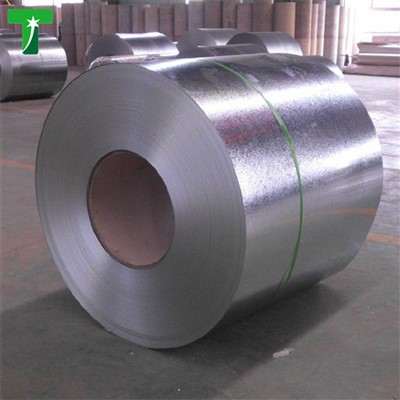
Hey there! As a supplier of GI Sheet Coil, I often get asked if this material can be used in electrical applications. Well, let's dig into this topic and find out.
First off, let's understand what GI Sheet Coil is. GI stands for Galvanized Iron. It's basically a steel sheet or coil that's been coated with a layer of zinc to protect it from rust and corrosion. This coating gives it a longer lifespan and makes it more durable, which are great qualities for a lot of different uses.
Now, when it comes to electrical applications, there are a few things we need to consider. One of the main factors is conductivity. Electrical applications usually require materials that can conduct electricity well. Steel, which is the base material of GI Sheet Coil, is a conductor of electricity. But the zinc coating on the GI Sheet Coil can affect its conductivity.
The zinc coating is non - conductive in the sense that it doesn't conduct electricity as well as the underlying steel. However, in some cases, this can actually be an advantage. For example, in some electrical enclosures or cabinets, you might want a material that provides some level of electrical insulation while still being strong and durable. The zinc coating on the GI Sheet Coil can act as a barrier, preventing accidental electrical contact and reducing the risk of short - circuits.
Let's talk about some specific electrical applications where GI Sheet Coil can be used.
Electrical Enclosures
Electrical enclosures are used to house electrical components like circuit breakers, switches, and control panels. They need to be strong, durable, and provide some level of protection against environmental factors. GI Sheet Coil is a great choice for making these enclosures. It can be easily formed into different shapes and sizes, and the zinc coating protects it from rust and corrosion, even in harsh environments. For instance, in industrial settings where there might be moisture, dust, or chemicals in the air, a GI Sheet Coil enclosure can keep the electrical components safe. You can check out our GI Sheet Coil for more details on the product that can be used for such applications.
Cable Trays
Cable trays are used to support and organize electrical cables. They need to be able to hold the weight of the cables and be resistant to damage. GI Sheet Coil can be used to manufacture cable trays. Its strength and durability ensure that the trays can withstand the weight of the cables over time. Also, the zinc coating protects the trays from corrosion, which is important as cables are often installed in areas where they might be exposed to moisture or other corrosive elements.
Transformers
In some transformers, GI Sheet Coil can be used for the outer casing. The casing needs to be able to dissipate heat and protect the internal components of the transformer. The steel in the GI Sheet Coil can conduct heat to some extent, and the zinc coating provides protection against rust. We have different types of GI Sheet Coils that can be suitable for transformer casings. For example, our S235JR Galvanized Carbon Steel Coil has the right properties for such applications.
Control Panels
Control panels are used to control and monitor electrical systems. They need to be made of a material that is easy to work with and can provide a stable environment for the electrical components. GI Sheet Coil can be cut, bent, and drilled easily, making it ideal for fabricating control panels. The zinc coating also gives it a nice finish and protects it from wear and tear. Our DC51D Galvanized Carbon Steel Coil For Construction can be a good option for control panel manufacturing.
However, there are also some limitations when using GI Sheet Coil in electrical applications.
High - Frequency Applications
In high - frequency electrical applications, the skin effect becomes more significant. The skin effect causes the electrical current to flow mostly on the surface of the conductor. Since the zinc coating on the GI Sheet Coil is less conductive than the steel, it can cause some issues in high - frequency applications. The resistance of the zinc coating can lead to increased power losses and reduced efficiency. So, for applications like high - frequency communication equipment or radio frequency circuits, GI Sheet Coil might not be the best choice.
High - Voltage Applications
In high - voltage applications, the electrical insulation requirements are very strict. While the zinc coating on the GI Sheet Coil can provide some insulation, it might not be sufficient for very high - voltage systems. Specialized insulating materials are usually required in these cases.


In conclusion, GI Sheet Coil can definitely be used in many electrical applications. It offers a good combination of strength, durability, and some level of electrical protection. It's suitable for applications like electrical enclosures, cable trays, transformers, and control panels. However, it's important to consider the specific requirements of the electrical application, such as frequency, voltage, and conductivity, before choosing GI Sheet Coil.
If you're in the market for GI Sheet Coil for your electrical applications, I'd love to talk to you. We can discuss your specific needs and see which of our products would be the best fit for you. Whether you need a small quantity for a prototype or a large order for a big project, we've got you covered.
References
- "Electrical Engineering Handbook" by Richard C. Dorf
- "Galvanized Steel: Properties, Applications, and Manufacturing" - Industry research report