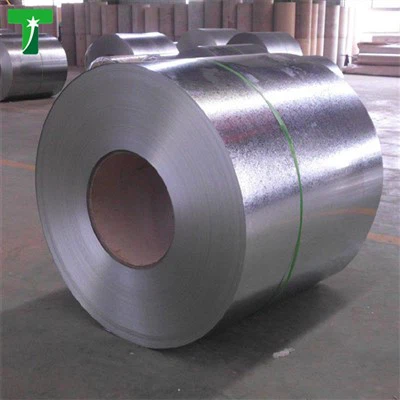
As a seasoned supplier of CR Coil Sheet, I've witnessed firsthand the diverse requirements and specifications that customers have when it comes to these products. Cold Rolled (CR) Coil Sheets are widely used in various industries due to their smooth surface finish, high precision, and excellent mechanical properties. In this blog, I'll delve into the standard sizes of CR Coil Sheet, providing you with comprehensive information to help you make informed decisions for your projects.
Understanding CR Coil Sheet
Before we dive into the standard sizes, let's briefly understand what CR Coil Sheet is. Cold rolling is a process where steel is rolled at a temperature below its recrystallization temperature, typically at room temperature. This process results in a smoother surface finish, better dimensional accuracy, and improved mechanical properties compared to hot-rolled steel. CR Coil Sheets are commonly used in automotive manufacturing, appliance production, construction, and many other industries.
Thickness
The thickness of CR Coil Sheet is one of the most critical dimensions, as it directly affects the strength and performance of the final product. Standard thicknesses for CR Coil Sheet typically range from 0.15 mm to 3.0 mm. However, thinner or thicker sheets can also be produced based on specific customer requirements.
- Ultra-thin Sheets: Sheets with a thickness of less than 0.3 mm are considered ultra-thin. These sheets are commonly used in applications where weight reduction and flexibility are crucial, such as in the electronics industry for manufacturing components like mobile phone casings and laptop frames.
- Thin Sheets: Sheets with a thickness between 0.3 mm and 1.0 mm are widely used in various industries. They are suitable for applications that require a balance between strength and formability, such as automotive body panels, appliance shells, and furniture components.
- Medium-thick Sheets: Sheets with a thickness between 1.0 mm and 2.0 mm are commonly used in structural applications where higher strength is required. They are often used in construction for manufacturing beams, columns, and other structural components.
- Thick Sheets: Sheets with a thickness greater than 2.0 mm are considered thick sheets. These sheets are used in heavy-duty applications where high strength and durability are essential, such as in the manufacturing of machinery parts, shipbuilding, and bridge construction.
Width
The width of CR Coil Sheet is another important dimension that varies depending on the application. Standard widths for CR Coil Sheet typically range from 600 mm to 1800 mm. However, wider or narrower sheets can also be produced to meet specific customer needs.
- Narrow-width Sheets: Sheets with a width of less than 1000 mm are considered narrow-width sheets. These sheets are commonly used in applications where space is limited or where specific width requirements are needed, such as in the manufacturing of small components or precision parts.
- Medium-width Sheets: Sheets with a width between 1000 mm and 1500 mm are the most commonly used widths in various industries. They offer a good balance between material utilization and processing efficiency, making them suitable for a wide range of applications.
- Wide-width Sheets: Sheets with a width greater than 1500 mm are considered wide-width sheets. These sheets are used in applications where large-area coverage is required, such as in the manufacturing of automotive body panels, large appliance shells, and construction panels.
Coil Weight
The weight of CR Coil Sheet is determined by its thickness, width, and length. Standard coil weights for CR Coil Sheet typically range from 1 ton to 25 tons. However, heavier or lighter coils can also be produced based on customer requirements.


- Light Coils: Coils with a weight of less than 5 tons are considered light coils. These coils are suitable for applications where handling and transportation are easier, such as in small-scale manufacturing operations or for projects with limited space.
- Medium Coils: Coils with a weight between 5 tons and 15 tons are the most commonly used coil weights in various industries. They offer a good balance between production efficiency and handling convenience, making them suitable for a wide range of applications.
- Heavy Coils: Coils with a weight greater than 15 tons are considered heavy coils. These coils are used in large-scale manufacturing operations where high productivity is required. They are often used in industries such as automotive manufacturing, appliance production, and construction.
Standard Sizes and Their Applications
Here are some common standard sizes of CR Coil Sheet and their typical applications:
| Thickness (mm) | Width (mm) | Coil Weight (tons) | Application |
|---|---|---|---|
| 0.2 - 0.5 | 600 - 1000 | 1 - 5 | Electronics, packaging, and precision components |
| 0.5 - 1.0 | 1000 - 1500 | 5 - 10 | Automotive body panels, appliance shells, and furniture components |
| 1.0 - 2.0 | 1200 - 1800 | 10 - 20 | Structural components, machinery parts, and construction panels |
| 2.0 - 3.0 | 1500 - 1800 | 15 - 25 | Heavy-duty applications, shipbuilding, and bridge construction |
Customization
While standard sizes are widely available, many customers require custom-sized CR Coil Sheet to meet their specific project requirements. As a supplier, we have the flexibility to produce CR Coil Sheet in various non-standard sizes, thicknesses, and widths. Whether you need a specific thickness for a high-strength application or a custom width for a unique project, we can work with you to provide the right solution.
Quality Assurance
At our company, we are committed to providing high-quality CR Coil Sheet that meets or exceeds international standards. We use advanced manufacturing processes and state-of-the-art equipment to ensure the consistency and reliability of our products. Our quality control team conducts rigorous inspections at every stage of the production process to ensure that each coil meets the specified requirements.
Conclusion
In conclusion, understanding the standard sizes of CR Coil Sheet is essential for selecting the right product for your project. By considering factors such as thickness, width, and coil weight, you can ensure that the CR Coil Sheet you choose meets your specific requirements in terms of strength, formability, and performance. Whether you need standard sizes or custom solutions, we are here to help. If you have any questions or need further information about our CR Coil Sheet products, please feel free to contact us. We look forward to working with you on your next project.
References
- "Cold Rolled Steel: Properties, Applications, and Manufacturing Processes." The Fabricator.
- "ASTM Standards for Carbon Steel Coils." ASTM International.
- "SS400 Steel: Properties, Applications, and Specifications." Engineering ToolBox.