


As a supplier of hot rolled steel in coils, ensuring the quality of our products before delivery is of utmost importance. We adhere to strict inspection procedures to guarantee that our customers receive high - quality steel coils that meet or exceed industry standards. In this blog, I will discuss the key inspection items for hot rolled steel in coils before they are delivered to our valued clients.
1. Dimensional Inspection
One of the primary aspects of inspecting hot rolled steel coils is checking their dimensions. This includes the thickness, width, and outer diameter of the coil. The thickness of the steel coil must be within the specified tolerance range. Even a slight deviation in thickness can affect the performance of the steel in its intended application. For example, if the steel is used in construction, incorrect thickness may compromise the structural integrity. We use precision measuring tools such as calipers and micrometers to measure the thickness at multiple points across the width and length of the coil.
The width of the coil is also crucial. It should match the customer's requirements precisely. Any variation in width can lead to problems during the manufacturing process, especially if the steel is to be used in automated machinery. We measure the width at the edges and the center of the coil to ensure uniformity.
The outer diameter of the coil is another important dimension. It affects the handling and storage of the coil. If the outer diameter is too large or too small, it may not fit properly in the transportation equipment or storage facilities. We measure the outer diameter using measuring tapes or specialized diameter - measuring devices.
2. Surface Quality Inspection
The surface quality of hot rolled steel coils is a significant factor that can impact their performance and appearance. We conduct a thorough visual inspection to check for surface defects such as scratches, cracks, pits, and scale. Scratches can weaken the steel and make it more susceptible to corrosion. Cracks are even more serious as they can lead to the failure of the steel under stress.
Pits on the surface can also cause problems, especially in applications where a smooth surface is required. For example, in the automotive industry, pits on the steel surface can affect the painting process and the overall aesthetic of the vehicle. Scale, which is a layer of oxidized iron on the surface of the steel, should be removed or within an acceptable limit. Excessive scale can interfere with subsequent processing steps such as welding or coating.
In addition to visual inspection, we may also use non - destructive testing methods such as magnetic particle inspection or ultrasonic testing to detect internal and surface - near defects that may not be visible to the naked eye.
3. Chemical Composition Analysis
The chemical composition of hot rolled steel coils plays a vital role in determining their mechanical properties. We perform chemical composition analysis to ensure that the steel contains the correct proportions of elements such as carbon, manganese, silicon, sulfur, and phosphorus.
Carbon is one of the most important elements in steel as it affects the strength and hardness of the material. Higher carbon content generally results in higher strength but lower ductility. Manganese helps to improve the strength and toughness of the steel. Silicon is used as a deoxidizer and can also enhance the strength of the steel.

Sulfur and phosphorus are considered impurities in steel. High levels of sulfur can cause hot shortness, which means the steel becomes brittle at high temperatures. Phosphorus can reduce the ductility and impact toughness of the steel. We use advanced analytical techniques such as spectroscopy to accurately determine the chemical composition of the steel coils.
4. Mechanical Property Testing
Mechanical property testing is essential to evaluate the performance of hot rolled steel coils under different loading conditions. We conduct several tests, including tensile testing, hardness testing, and impact testing.
Tensile testing measures the strength and ductility of the steel. We take samples from the coil and subject them to a controlled pulling force until they break. The test provides information such as the yield strength, ultimate tensile strength, and elongation of the steel. These properties are important in applications where the steel will be subjected to tensile forces, such as in the construction of bridges or buildings.
Hardness testing is used to determine the resistance of the steel to indentation or scratching. There are different hardness testing methods, such as the Brinell, Rockwell, and Vickers hardness tests. Hardness is related to the strength and wear resistance of the steel. For example, in the manufacturing of tools, a high - hardness steel is required to withstand the wear and tear during use.
Impact testing assesses the ability of the steel to absorb energy under sudden loading. We use a Charpy or Izod impact test to measure the impact toughness of the steel. This is crucial in applications where the steel may be subjected to impact loads, such as in the automotive and aerospace industries.
5. Coil Shape and Winding Inspection
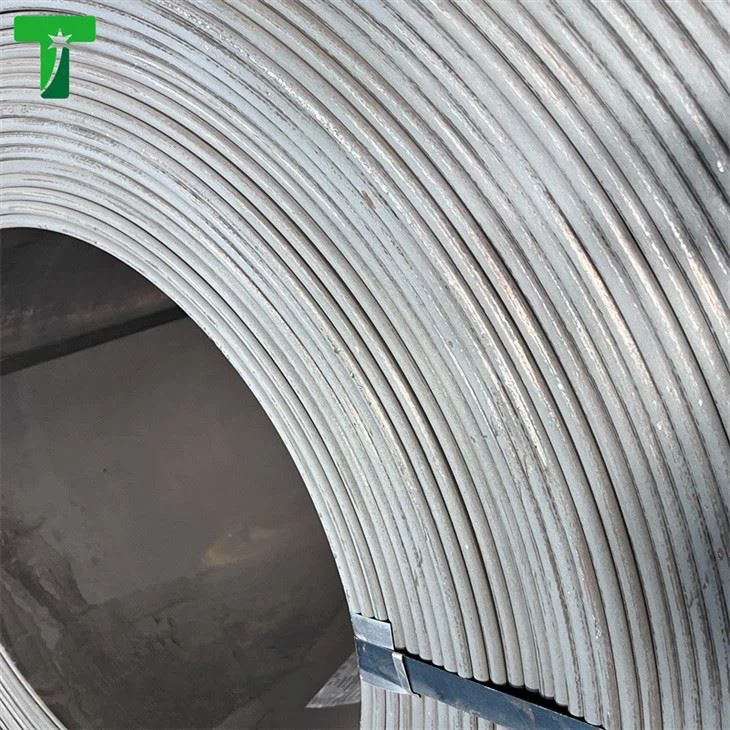
The shape and winding of the hot rolled steel coil are important for its handling and processing. The coil should be wound tightly and evenly to prevent it from unwinding during transportation or storage. We check the alignment of the winding layers to ensure that they are parallel and evenly spaced.
Any irregularities in the coil shape, such as ovality or camber, can cause problems during the unwinding process. Ovality refers to the deviation of the coil from a perfect circular shape. Camber is the curvature of the coil in the longitudinal direction. We use optical measuring systems or mechanical gauges to detect and measure these shape irregularities.
6. Documentation and Traceability
In addition to the physical and chemical inspections, we also ensure that all the necessary documentation is in order. This includes certificates of analysis, which provide detailed information about the chemical composition and mechanical properties of the steel coils. We also maintain records of the manufacturing process, including the heat treatment and rolling parameters.
Traceability is another important aspect. We use unique identification numbers for each coil, which allows us to track its production history, from the raw materials to the final product. This is important for quality control and in case of any issues or complaints from the customers.
Conclusion
As a supplier of hot rolled steel in coils, we are committed to providing our customers with high - quality products. By conducting comprehensive inspections of dimensional accuracy, surface quality, chemical composition, mechanical properties, coil shape, and ensuring proper documentation and traceability, we can guarantee that our steel coils meet the highest standards.
If you are in the market for high - quality hot rolled steel coils, we invite you to explore our product range. We offer a variety of steel coils, including ASTM A36 Carbon Steel Coil For Building, CR Coil Sheet, and SPHC Hot Rolled Carbon Steel Coil. Contact us for more information and to discuss your specific requirements. We look forward to working with you to meet your steel needs.
References
- "Steel Metallurgy and Applications" by George E. Totten and D. Scott MacKenzie
- "ASTM Standards for Steel Products" published by ASTM International
- "Handbook of Steelmaking" by John F. Wallace


