


Low carbon steel sheet, known for its versatility and affordability, is a staple in numerous industries, from automotive manufacturing to construction. As a leading supplier of low carbon steel sheet, I'm excited to take you through the intricate process of how this essential material is manufactured.
Raw Material Selection
The journey of low carbon steel sheet begins with the careful selection of raw materials. Iron ore, the primary ingredient, is sourced from mines around the world. The quality of the iron ore significantly impacts the final properties of the steel sheet. We ensure that the iron ore we use has a high iron content and low levels of impurities such as sulfur and phosphorus. These impurities can weaken the steel and affect its corrosion resistance, so strict quality control measures are in place during the sourcing process.
In addition to iron ore, other materials such as coal and limestone are also required. Coal is used as a fuel and a reducing agent in the iron - making process, while limestone acts as a flux to remove impurities. The precise combination of these raw materials is crucial for producing high - quality low carbon steel.
Iron Making
The first major step in the manufacturing process is iron making, which typically takes place in a blast furnace. The blast furnace is a large, cylindrical structure where the raw materials are loaded from the top. A hot blast of air is injected into the furnace from the bottom, causing the coal to burn and produce carbon monoxide. This carbon monoxide then reacts with the iron ore, reducing it to iron.
The chemical reaction can be simplified as follows:
[Fe_2O_3 + 3CO \rightarrow 2Fe+3CO_2]
The molten iron, known as pig iron, collects at the bottom of the blast furnace. Pig iron contains a relatively high percentage of carbon (around 3 - 4%) along with other impurities. This high - carbon content makes pig iron brittle and unsuitable for most applications, so further processing is required.
Steel Making
Once the pig iron is produced, it is transferred to a steelmaking furnace. There are two main types of steelmaking furnaces: the basic oxygen furnace (BOF) and the electric arc furnace (EAF).
In a basic oxygen furnace, high - purity oxygen is blown into the molten pig iron. The oxygen reacts with the carbon and other impurities in the pig iron, burning them off and reducing the carbon content to the desired level for low carbon steel (usually less than 0.3%). Lime and other fluxes are also added to remove sulfur and phosphorus.
The electric arc furnace, on the other hand, uses electricity to melt scrap steel. Scrap steel is a valuable source of raw material as it reduces the need for virgin iron ore and is more energy - efficient. The electric arcs generated between the electrodes and the scrap steel provide the heat required for melting. Once the scrap steel is melted, alloying elements can be added to adjust the composition of the steel.
Continuous Casting
After the steel is made, it is ready for continuous casting. This process involves pouring the molten steel into a water - cooled mold, which gives the steel a semi - solid shape. As the steel moves through the mold, it continues to solidify, and a continuous strand of steel is formed.
Continuous casting is a highly efficient process that allows for the production of steel with a uniform cross - section. The strand can be cut into various lengths depending on the requirements. This step is crucial as it determines the initial shape of the steel that will later be processed into sheets.
Rolling
The next step in the manufacturing of low carbon steel sheet is rolling. Rolling is a process that reduces the thickness of the steel and improves its mechanical properties. There are two main types of rolling: hot rolling and cold rolling.
Hot Rolling
Hot rolling is carried out at high temperatures, typically above the recrystallization temperature of the steel (around 900 - 1000°C). The steel strand is heated in a reheating furnace and then passed through a series of rolling mills. The rolling mills apply pressure to the steel, reducing its thickness and increasing its length.
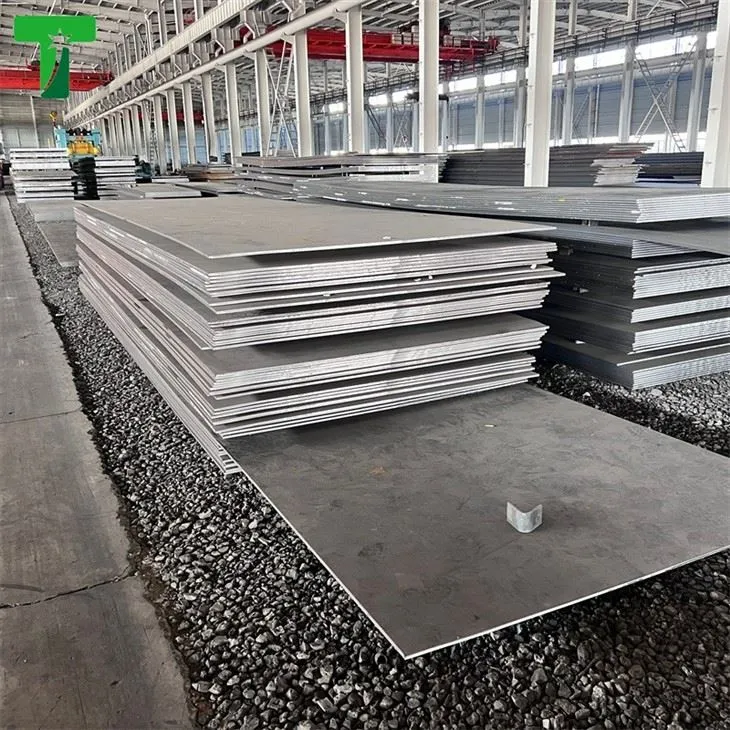
Hot - rolled steel sheets have a characteristic rough surface finish and are relatively soft and ductile. They are commonly used in applications where precise dimensions are not critical, such as structural components in buildings and bridges.
Cold Rolling
Cold rolling is performed at room temperature. The hot - rolled steel sheets are further processed in cold - rolling mills. Cold rolling reduces the thickness of the steel even more precisely and improves its surface finish, strength, and hardness.
During cold rolling, the steel is passed through a series of rollers under high pressure. The reduction in thickness can be carefully controlled, allowing for the production of steel sheets with very precise dimensions. Cold - rolled steel sheets are often used in applications where a smooth surface finish and high dimensional accuracy are required, such as in the automotive and appliance industries.

Surface Treatment
After rolling, the low carbon steel sheets may undergo surface treatment to improve their corrosion resistance and appearance. One common surface treatment is galvanizing. Galvanizing involves coating the steel sheet with a layer of zinc. There are two main methods of galvanizing: hot - dip galvanizing and electro - galvanizing.
In hot - dip galvanizing, the steel sheet is immersed in a bath of molten zinc. The zinc reacts with the steel surface, forming a series of zinc - iron alloy layers and a pure zinc outer layer. This zinc coating provides excellent corrosion protection by acting as a sacrificial anode, corroding in place of the steel. You can find more information about Hot Dip Galvanized Steel Plate.
Electro - galvanizing, on the other hand, uses an electric current to deposit a thin layer of zinc onto the steel surface. This method allows for more precise control of the coating thickness and is often used for applications where a thinner zinc coating is required.
Another type of surface treatment is painting or coating with other protective materials. These coatings can provide additional protection against corrosion and can also enhance the aesthetic appeal of the steel sheet.
Quality Control
Throughout the manufacturing process, strict quality control measures are in place to ensure that the low carbon steel sheets meet the required standards. Various tests are conducted, including chemical analysis to determine the composition of the steel, mechanical testing to evaluate its strength and ductility, and surface inspection to check for defects.
For example, tensile testing is used to measure the strength and elongation of the steel sheet. A sample of the steel is pulled in a testing machine until it breaks, and the force and deformation are recorded. This data is used to calculate the yield strength, ultimate tensile strength, and elongation of the steel.
Conclusion
The manufacturing of low carbon steel sheet is a complex and highly controlled process that involves multiple steps, from raw material selection to surface treatment. Each step plays a crucial role in determining the final properties and quality of the steel sheet.
As a supplier, we are committed to providing high - quality low carbon steel sheets that meet the diverse needs of our customers. Whether you are in the automotive, construction, or manufacturing industry, we have the expertise and resources to supply you with the right steel sheet for your application.
If you are interested in our SPCC Cold Rolled Galvanized Low Carbon Steel Sheet or Low Temperature Carbon Steel Plate, please feel free to contact us for more information and to discuss your procurement needs. We look forward to working with you to find the best solutions for your projects.
References
- ASM Handbook Committee. (2004). ASM Handbook Volume 1: Properties and Selection: Irons, Steels, and High - Performance Alloys. ASM International.
- Degarmo, E. P., Black, J. T., & Kohser, R. A. (2003). Materials and Processes in Manufacturing. John Wiley & Sons.
- Kalpakjian, S., & Schmid, S. R. (2008). Manufacturing Engineering and Technology. Pearson Prentice Hall.


