


As a supplier of CR Coil Sheet, ensuring the quality of our products is of utmost importance. Cold-rolled (CR) coil sheets are widely used in various industries due to their smooth surface finish, high dimensional accuracy, and excellent mechanical properties. To maintain the high standards of our CR Coil Sheets, we employ a variety of inspection methods. In this blog post, I will discuss some of the key inspection methods that we use to guarantee the quality of our CR Coil Sheets.
Visual Inspection
Visual inspection is the most basic and fundamental method for inspecting CR Coil Sheets. It involves a thorough examination of the surface of the coil sheet to detect any visible defects such as scratches, dents, cracks, rust, or other surface irregularities. Our experienced inspectors carefully examine the entire surface of the coil sheet, both on the top and bottom sides, using their naked eyes or with the help of magnifying glasses for more detailed inspection.
During visual inspection, we also check the edges of the coil sheet for any burrs, sharp edges, or unevenness. These defects can not only affect the appearance of the final product but also pose a safety hazard during handling and processing. Any coil sheets with visible defects are immediately removed from the production line and marked for further analysis or rejection.
Visual inspection is a quick and cost - effective way to identify major surface defects. However, it has its limitations as it may not be able to detect internal defects or very small surface flaws. Therefore, we complement visual inspection with other more advanced inspection methods.
Dimensional Inspection
Dimensional accuracy is crucial for CR Coil Sheets, as they need to meet the specific requirements of our customers. We use a variety of measuring tools such as calipers, micrometers, and laser measuring devices to check the thickness, width, and length of the coil sheets.
The thickness of the CR Coil Sheet is measured at multiple points across the width and length of the sheet to ensure uniformity. Any deviation from the specified thickness can affect the mechanical properties and performance of the final product. For example, if the thickness is too thin, the sheet may not have sufficient strength, while if it is too thick, it may increase the weight and cost of the product.
The width and length of the coil sheet are also measured to ensure that they meet the customer's specifications. Any significant deviation in these dimensions can cause problems during the subsequent processing and assembly operations.
In addition to the basic dimensions, we also check the flatness and camber of the coil sheet. Flatness is important for applications where the sheet needs to be laid flat or welded without any distortion. Camber, which refers to the curvature of the sheet along its length, can also affect the processing and installation of the coil sheet.
Surface Roughness Inspection
The surface roughness of CR Coil Sheets can have a significant impact on their performance and appearance. A smooth surface finish is often required for applications such as automotive body panels, electrical appliances, and decorative items.

We use surface roughness measuring instruments such as profilometers to measure the surface roughness of the coil sheets. These instruments work by tracing a stylus across the surface of the sheet and measuring the height variations of the surface profile. The results are then compared with the specified surface roughness requirements to determine if the coil sheet meets the quality standards.
A proper surface roughness not only enhances the aesthetic appeal of the product but also improves its corrosion resistance and paint adhesion. If the surface is too rough, it may trap moisture and contaminants, leading to corrosion. On the other hand, if the surface is too smooth, the paint may not adhere properly.
Mechanical Property Testing
Mechanical property testing is essential to ensure that the CR Coil Sheets have the required strength, ductility, and toughness for their intended applications. We conduct a series of mechanical tests, including tensile testing, hardness testing, and impact testing.
Tensile testing is used to measure the strength and ductility of the coil sheet. A sample of the coil sheet is cut into a standard test specimen and then pulled in a tensile testing machine until it breaks. The machine records the force applied and the elongation of the specimen during the test. From these measurements, we can determine the yield strength, ultimate tensile strength, and elongation percentage of the coil sheet.
Hardness testing is used to measure the resistance of the coil sheet to indentation or scratching. We use different hardness testing methods such as Rockwell hardness testing, Brinell hardness testing, and Vickers hardness testing, depending on the thickness and material of the coil sheet. Hardness is an important property as it affects the wear resistance and machinability of the coil sheet.
Impact testing is used to measure the toughness of the coil sheet, which is its ability to absorb energy during impact loading. A Charpy or Izod impact test is commonly used, where a notched specimen of the coil sheet is struck by a pendulum hammer. The energy absorbed by the specimen during the impact is measured, and this value indicates the toughness of the coil sheet.
Chemical Composition Analysis
The chemical composition of the CR Coil Sheet plays a vital role in determining its mechanical properties and corrosion resistance. We use advanced analytical techniques such as spectroscopy to analyze the chemical composition of the coil sheet.
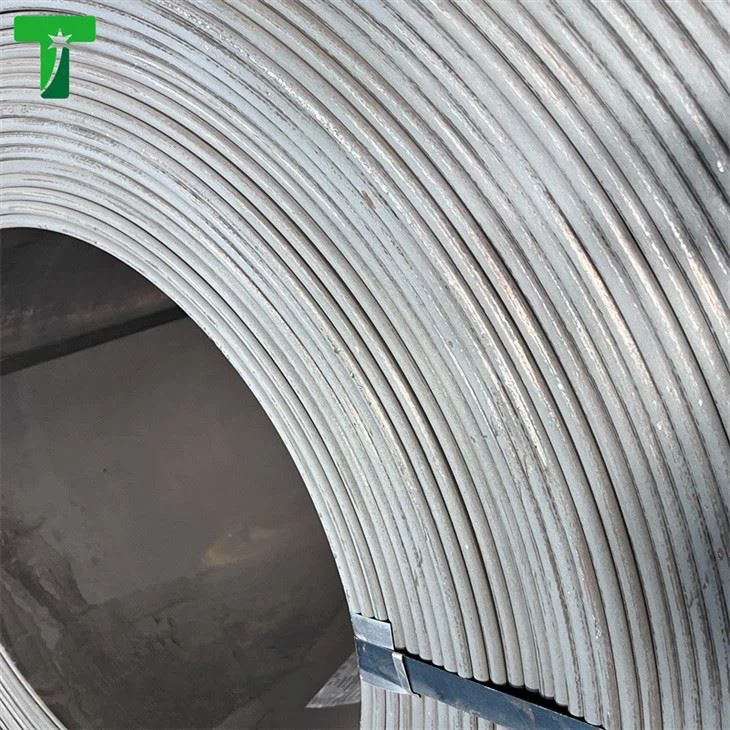
Spectroscopy works by analyzing the light emitted or absorbed by the atoms in the sample. By measuring the wavelengths and intensities of the light, we can identify the elements present in the coil sheet and determine their concentrations.
The chemical composition of the coil sheet needs to be carefully controlled to ensure that it meets the required standards. For example, the carbon content in the steel affects its strength and hardness, while the presence of alloying elements such as chromium, nickel, and molybdenum can improve its corrosion resistance and mechanical properties.
Ultrasonic Testing
Ultrasonic testing is a non - destructive testing method that is used to detect internal defects such as cracks, porosity, and inclusions in the CR Coil Sheets. In this method, high - frequency ultrasonic waves are transmitted into the coil sheet, and the reflections of these waves are analyzed to detect any internal flaws.
Ultrasonic testing is a very sensitive method and can detect small defects that may not be visible during visual inspection. It is also a fast and efficient way to inspect large volumes of coil sheets. However, it requires skilled operators and specialized equipment.

Eddy Current Testing
Eddy current testing is another non - destructive testing method that is used to detect surface and near - surface defects in the CR Coil Sheets. When an alternating current is passed through a coil placed near the surface of the coil sheet, it generates an alternating magnetic field. This magnetic field induces eddy currents in the coil sheet. Any defects in the sheet will cause a change in the eddy current pattern, which can be detected by the testing equipment.
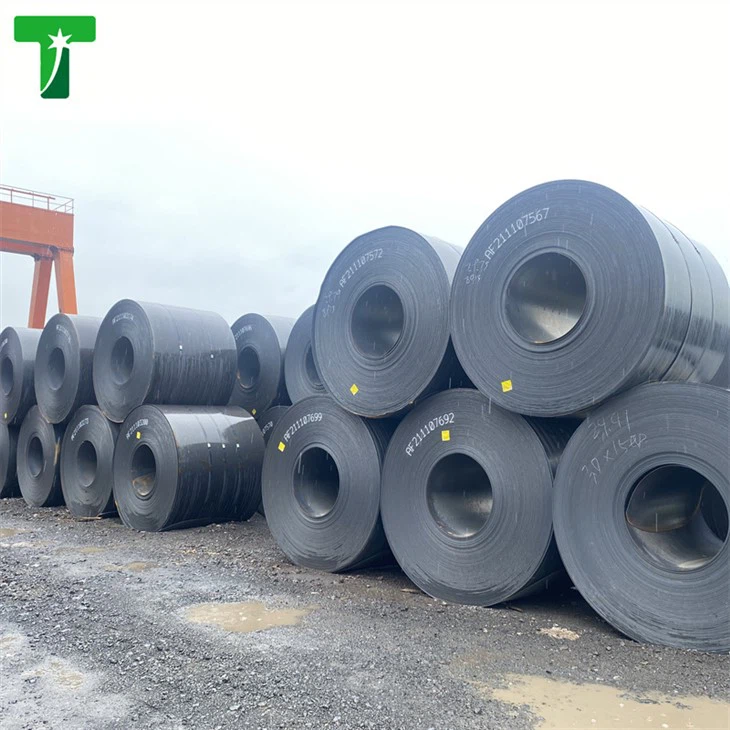
Eddy current testing is particularly useful for detecting surface cracks, corrosion, and variations in the electrical conductivity of the coil sheet. It is a fast and reliable method that can be used for on - line inspection during the production process.
In conclusion, as a supplier of CR Coil Sheets, we are committed to providing our customers with high - quality products. By using a combination of these inspection methods, we can ensure that our CR Coil Sheets meet the strictest quality standards. Whether you are in the automotive industry, construction industry, or any other industry that requires CR Coil Sheets, you can trust our products to deliver excellent performance.
If you are interested in our CR Coil Sheets or have any questions about our inspection methods, please feel free to contact us for further discussion and potential procurement. We also offer a wide range of other steel products such as SPHC Hot Rolled Carbon Steel Coil, ASTM A36 Carbon Steel Coil For Building, and Hot Rolled Steel in Coils.
References
- ASM Handbook Volume 1: Properties and Selection: Irons, Steels, and High - Performance Alloys
- ASTM International Standards for Steel Products
- Nondestructive Testing Handbook, Volume 7: Ultrasonic Testing


